Drag And Drop File Download Html5 For Firefox
Drag and Drop Files with HTML5 and Flask Doing drag and drop file uploads has interesting uses. Pictures, and so on are all scenarios where this is handy. So here's a look at things I think about when it comes to drag and drop file uploads. Hadoop interview questions and answers pdf download hadoop interview questions pdf. Reply Delete.
Kantu extension modules – or short: XModules - are native apps that add powerful new features to the Kantu open-source core. XModules add real mouse click events, keyboard shortcuts simulation and direct file access for macros and CSV files.
Download: Kantu XModules Installer
Since the XModules are native apps, there is a separate installer for Windows, Mac and Linux. The modules works with both, Kantu for Firefox and Chrome. So if you use Kantu with both browsers, you need to install the XModules only once.
RealUser Simulation XModule - Trigger native OS events for click, move, type and drag
The RealUser XModule is a native app for Windows, Mac and Linux. It directly interacts with the operating system to simulate native click, drag and type (sendkey) events. Together with Kantu's built-in computer vision, this module takes web automation to a new level and makes Kantu the most powerful browser extension for web automation. But most importantly, it makes creating web automation scripts fun again.
The RealUser XModule adds three new commands:
| Native OS events | Comment |
|---|---|
| XClick | This simulates a real user mouse click, double-click or right-click. |
| XMove | Simulate mouse up, mouse down and mouse over events |
| XType | Send native keyboard events and shortcuts |
Note: XClick, XMove and XType commands are not recorded automatically, you need to add them manually to your macro. So what we typically do ourself is to first record a skeleton macro (OPEN command, plus whatever part of the macro can be recorded with the classic Selenium IDE style commands) and then fill in X-commands manually as required.
Some tips for creating macros with real user simulation:
- If the reason for using XClick is that a html-click was not recognized by the website:
You can convert a recorded Click command to XClick just by changing the command. The same selector is used then. - If the reason for using XClick is that a selector can not be found or constructed (e. g. with tricky frames and iframes):
Switch from Click to XClick and replace the selector with an image of the button or link. - Type and Sendkey commands can be upgraded to XType by simply changing the command and removing the selector.
XType does not use a selector. It works like a normal keyboard and sends the text to the element that has the focus. If needed, you can use an XClick command first to make sure the right input box has the focus.
File Download In Php
File Access XModule - read and write directly to your hard drive
The File Access XModule is a native app for Windows, Mac and Linux. It adds direct file access to Kantu, so you can read/write macros, test suites and CSV files directly from the hard drive. Once installed you can change the file storage mode to hard drive storage mode, and this means:
File Download Share
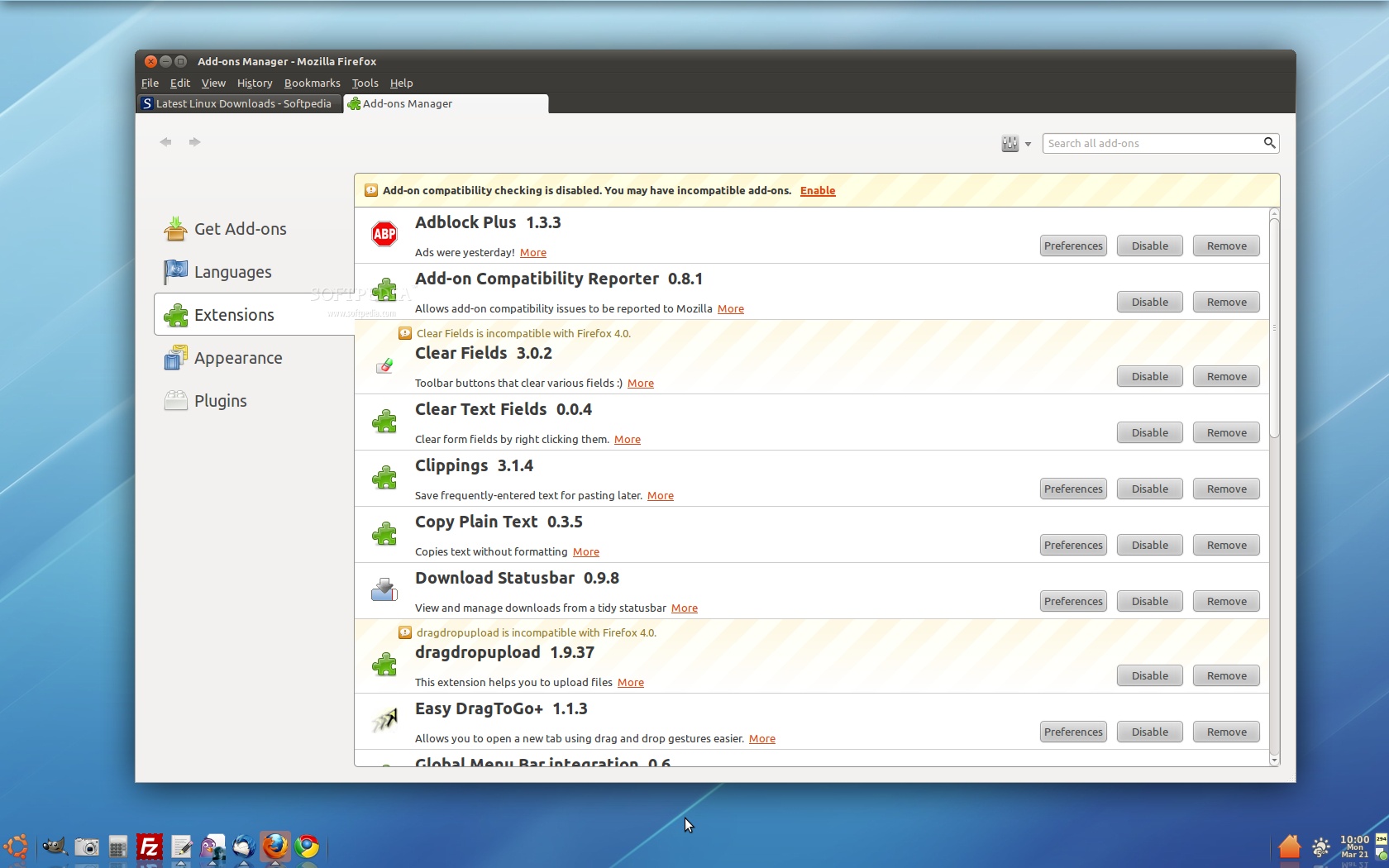
- Macros are stored on the hard drive ( '/macros' folder)
- Testsuites are stored on the hard drive ( '/testsuites' folder)
- Computer vision input images are stored on the hard drive ( '/images' folder). The images listed in the Image tab are the images from the '/image' folder.
- csvRead and csvSave work directly to/from the hard drive. And the CSV files listed in the CSV tab are the files from the '/csv' folder.
Having the files directly on the hard drive makes many tasks easier, for example you can easily check-in/check-out macro files with source control. The same is true for and 'on the hard drive' storage modes, as the paragraph below explains.
Storage modes
Kantu has two kind of storage modes for macros and data:
Inside the web browser using HTML5 local storage. This is the default mode of Kantu, as it is the only way browser extensions can store information
Directly on the hard drive. This method feels much more natural and convenient. It requires the FileAccess XModule to be installed. When the hard-drive storage mode is active, you will notice the hard drive icon on every Kantu Tab that read and writes information directly to the disk. In hard-drive mode csvRead and csvSave read and save directly to files, instead of using the browser local storage.
The hard drive storage option is great for team collaboration. It works with all source code control system e. g. Git (GitHub) or Perforce. This allows all team members to easily share and version control macros (test cases), images and CSV files.
And in harddrive mode you can have multiple instances of Chrome and Firefox share the same macros.
After installing the FileAccess XModule don't be surprised that there are no macros in the hard drive list view yet. You first need to export your current macros from inside the browser to the hard drive.
To transfer existing macros to a new Kantu macros folder you can export all macros, testsuites, images and CSV files at once with the Kantu HTML5 Local Storage Backup button. Then you can extract the content of this backup archive to your new Kantu folder.
Alternatively, right-click on any macro and select 'Copy to Hard-Drive Storage'. This is shown in the screenshot above.
How to share macros and other data between Kantu users
Storing macros, test suites, images and CSV files directly on the hard drive allows you to share them between co-workers and manage backups and revisions of the files easily:
To share macros with your team, point the Kantu home folder to a shared location, e. g using Dropbox, Google Drive or a version control systems like Git/Github. Alternatively, if your team is in the same local network, you can simply point the Kantu home folder to a shared network drive.
How to install the XModules
The screencasts below shows how to download, install and use the XModules. This includes the FileAccess XModule.
Installation on Windows
Installation on Linux and Mac
All XModules run 100% local. They never contact the internet
XModules never contact the internet. Kantu and the XModules are designed to fit the highest security and data protection standards for Enterprise use. All processing is done locally on your machine. The XModules only communicate with the Kantu browser extension.
Kantu does not send any data back to us or any other place. You can easily verify this statement because all internet communication - like loading websites in your browser - is done inside the open-source Kantu core. Kantu is open-source, which guarantees you the freedom to run, study, share and modify the software.
Dragging and dropping files from your desktop to a browser is one of the ultimate goals for web application integration. This is the first in a four-part series of posts which describes how to:
- enable file dragging and dropping onto a web page element
- analyze dropped files in JavaScript
- load and parse files on the client
- asynchronously upload files to the server using XMLHttpRequest2
- show a graphical progress bar while the upload occurs
- use progressive enhancement to ensure your file upload form works in any browser (good news for all you IE6 fans!)
- code it in plain ol’ JavaScript without a library.
Phew.
Big, Bad Browser Support
Before we begin, this tutorial refers to several cutting-edge HTML5 techniques so expect support to be patchy. The code works today, but it’s possible the APIs will change and browsers will evolve.
- Recent versions of Firefox and Chrome support all features and work perfectly.
- Opera can parse files in JavaScript, but file dropping and XMLHttpRequest2 uploading is not implemented.
- IE and the desktop editions of Safari do not support any of the APIs.
- Apple has disabled HTML file upload forms on the iPhone and iPad editions of Safari. Anyone know why?
Finally, note that my code shows the fundamental concepts. There’s little error checking and you would need to adapt it for a production system.
The HTML and CSS
Here’s our standard form with a file input type. The only HTML5 feature is the “multiple” attribute which allows the user to select any number of files.
We’ll be uploading files to a server running PHP but the code is much the same no matter what technology you’re using. The hidden MAX_FILE_SIZE value specifies 300,000 bytes — this is used by PHP but we’ll also check it client-side to prevent huge file uploads.
The #filedrag element will be used as our file drag and drop location. The element is hidden in CSS but it will be enabled in JavaScript if drag and drop is supported:
We’ve also defined a .hover class which changes the style when the user has dragged a file on to the element. Browsers don’t apply a :hover style in that situation, but we can add the class with JavaScript when the event occurs.
The File API
The W3C File API provides several objects. We’ll be using:
- FileList: represents an array of selected files.
- File: represents an individual file.
- FileReader: an interface which allows us to read file data on the client and use it within JavaScript.
Attaching JavaScript Events
Time to get our hands dirty with some JavaScript. We’re not using a JavaScript library so, to save our typing fingers, we’ll create a couple of helper functions to return an element by ID and output status messages:
We’ll now check if the File API is available and call an Init() function:
The Init() function:
- Sets a “change” event listener to the file input element.
- Displays the #filedrag element.
- Sets “dragover” and “dragleave” event listeners to change the style of the #filedrag element.
- Sets a “drop” event listener for the #filedrag element.
- Hides the form submit button — it’s not required since we’ll be analyzing and uploading files as they’re chosen.
Optionally, you could hide the file input element when file dragging is supported. Personally, I prefer to offer both options since dragging and dropping incurs a number of usability issues.
File Upload Drag And Drop
The XMLHttpRequest.upload method check prevents problems in Opera. The browser supports File, FileList and FileReader, but not drag and drop events or XMLHttpRequest2. It can therefore display file information but we don’t want to show the #filedrag element or remove the submit button.
File Drop Style Change
Few people have experienced file drag and drop in a web browser. In fact, experienced web users may not consider it to be impossible. Therefore, we’ve used an element which states “drop files here”. We also want to indicate when a file has been dragged onto the #filedrag location by changing it’s styling:

Analyzing Dropped or Selected Files
We’re using the same FileSelectHandler() function regardless of whether one or more files was selected using “Browse” or dragged onto the #filedrag location:
The function:
- Calls FileDragHover() to remove hover styling and cancel browser events. This is essential otherwise the browser may attempt to display the file.
- Fetches a FileList object. This will either be from the file input box (e.target.files) or #filedrag element (e.dataTransfer.files).
- Finally, the function loops through all File objects in the FileList and passes it as an argument to the ParseFile() function…
The function outputs information using the three main read-only properties provided by the File object:
- .name: the file name (it does not include path information)
- .type: the MIME type, e.g. image/jpeg, text/plain, etc.
- .size: the file size in bytes.
Please view the demonstration page in Firefox, Chrome, or Opera (no drag & drop support). You can also download the files to examine the code.
We’ve covered a lot of ground. In my next article, we’ll discover How to Open Dropped Files Using HTML5 and JavaScript…
This article has also been translated into Armenian
If you enjoyed reading this post, you’ll love Learnable; the place to learn fresh skills and techniques from the masters. Members get instant access to all of SitePoint’s ebooks and interactive online courses, like HTML5 & CSS3 For the Real World.
Comments on this article are closed. Have a question about HTML5? Why not ask it on our forums?